
Which Cloud Service Provider Uses Solid-State Storage?
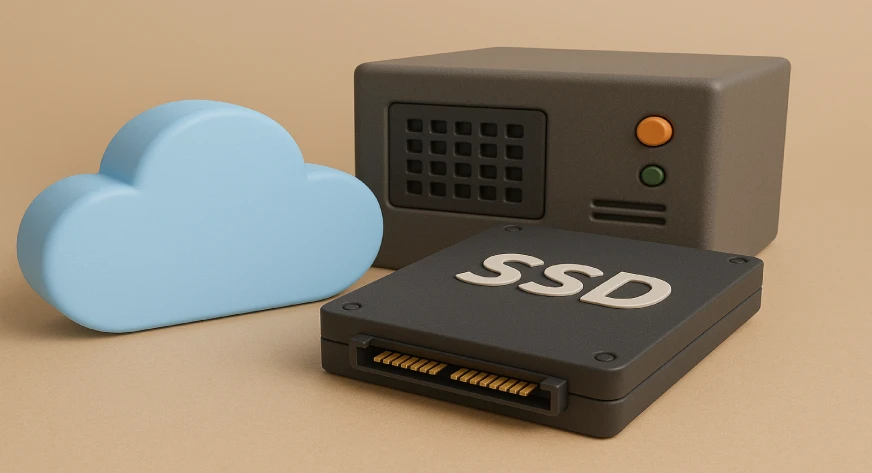
Major cloud providers like Athena Cloud Storage, Amazon Web Services (AWS), Microsoft Azure, and Google Cloud Platform (GCP) all use solid-state storage (SSD) for their block storage services.
If you’re looking for faster and more reliable cloud performance, the short answer is: choose a cloud service provider that offers SSD-backed storage. SSDs, or solid-state drives, provide much quicker access to files and data compared to traditional hard drives, making them ideal for businesses and individuals who need speed and reliability.
What is Solid-State Storage?
Solid-state storage (SSD) is a type of storage that uses flash memory to store data, unlike traditional hard drives (HDDs) that use spinning disks.
- Faster Access: SSDs can read and write data almost instantly, reducing load times.
- Durability: Without moving parts, SSDs are less prone to mechanical failures.
- Energy Efficient: They use less power, which is better for data centers and sustainability.
For cloud computing, this means that files stored on SSD-backed servers load quickly, applications run smoothly, and overall productivity is higher.
Example: A graphic design team working with large video files will notice much faster upload and download times on SSD cloud storage compared to HDD storage.
How Do Cloud Providers Use SSD?
Cloud providers integrate SSDs into their storage options in several ways:
- Primary Storage: Some providers offer SSDs as the default storage for files and applications.
- Tiered Storage: Providers often have tiers—hot storage (frequently accessed) may use SSD, while cold storage (rarely accessed) may use HDD.
- Virtual Machines & Databases: SSD-backed servers speed up computing tasks and reduce latency.
Example: A software development team using SSD-backed cloud servers will experience shorter build and deployment times for their applications.
Benefits of SSD Cloud Storage
Choosing SSD-backed cloud storage offers several tangible advantages that go beyond just speed:
- Speed and Efficiency: SSDs have near-instant read/write speeds, which means large files, applications, and databases can be accessed much faster than on traditional HDD storage. This speed is especially useful for tasks like video editing, large-scale data analytics, or running complex software.
- Better Collaboration: Teams working remotely or across multiple locations can access shared files without lag. Multiple users can work on the same project simultaneously, streamlining workflow and improving productivity.
- Reliability: SSDs have no moving parts, which reduces the risk of mechanical failure. This makes data storage more reliable, minimizing potential downtime and loss of critical files.
- Energy Efficiency: SSDs consume less power than traditional hard drives, reducing the energy footprint of data centers. This is not only cost-effective but also more environmentally friendly.
- Scalability: Businesses can easily expand storage without impacting performance. SSD-backed storage can handle sudden surges in traffic or data usage efficiently, ensuring consistent performance as your needs grow.
- Enhanced Security: Many SSD-backed cloud services include features like encryption and access controls, adding an extra layer of security to your critical data.
Example: A software development company can run virtual machines and test environments on SSD-backed cloud storage without experiencing delays, allowing faster iteration and deployment cycles.
Use Cases for SSD Cloud Storage
- Large File Transfers: Professionals dealing with videos, graphics, and high-resolution images benefit from faster upload and download times. For example, a video editing studio can move raw footage and render files between team members without delays.
- High-Traffic Applications: Websites, online games, and SaaS platforms experience better performance with SSD storage. Quick read/write speeds handle thousands of simultaneous requests efficiently.
- Collaborative Teams: Remote or distributed teams working on shared files experience fewer delays. Teams can edit, upload, and download documents in real-time without performance issues.
- Real-Time Data Processing: Industries relying on analytics, AI, or machine learning benefit from SSD storage’s speed. Datasets can be read, processed, and updated almost instantly, speeding up insights and decision-making.
- Database Hosting: SSD-backed storage is ideal for databases that require fast transactions and low latency, such as financial systems or CRM platforms.
Also Read, If you are looking and want to Choose the Best Lifetime Cloud Storage , Checkout this article!
Final Thoughts
When speed, reliability, and efficiency matter, choosing a cloud service provider with SSD storage is essential. It reduces downtime, improves performance, and makes teamwork seamless. Whether you’re an individual managing large files or a business running critical applications, SSD-backed cloud storage ensures your data is accessible, safe, and fast.
For businesses and teams looking for secure, scalable SSD-backed cloud storage, Athena by WebWorks Co. provides isolated workspaces, unlimited users, and high-speed access, making collaboration simple and efficient.
Frequently Asked Questions
Q1. Is cloud better than SSD?
Cloud storage is better for accessibility, scalability, and collaboration, while SSD is better for speed, control, and security. The better option depends on your use case.
Q2. What is the cost of 2TB cloud storage?
The cost of 2TB cloud storage typically ranges from ₹219 to ₹650 per month depending on the provider (Athena Cloud,Google Drive, iCloud, OneDrive, etc.
